Finding the Fourth Leaf
What starts as focus can become instinct. An eye for the anomaly.
Ever since I was young, I’ve found a great sense of pleasure in looking for four-leaf clovers. I’d spend hours in the grass, both in the shade and the sun, staring into fields of green, searching for something just slightly different. It was a pastime my childhood babysitter, Gwendolyn, taught me. At first, it felt simple: just look closely. But over time, I realized it was something else entirely.
I learned how to focus. Really focus.
The kind of focus where everything else fades out, where I don’t think about anything waiting for me outside of that moment. I give myself over to the process completely. Just scanning. Just looking. Becoming a seeker of the anomaly.
And when I find one, there’s always that sudden little spark of excitement.
"There it is!"

When I finally found that lucky clover, I’d be so pleased with myself. It became addicting. I’d find one, revel in it for a moment, and immediately keep looking for more. Sometimes I’d find five. Six. I even found a seven-leaf clover once. I still have it framed in my room.
I’d leave parks with handfuls. Most people struggled to find even one. I didn’t understand why.
Even now, I’m not sure I fully do. I can’t always explain what makes one stand out. Sometimes it happens when I’m intentionally scanning. Other times, I’m not even looking, and it’s like they just… appear. I’ll step outside to take out the trash and come back inside with one in my hand.
At some point, I stopped having to search so hard. I didn’t lose the skill. I refined it.
What started as focus became instinct.
That same instinct is what I bring into the world of systems and software. It’s not that I enjoy bugs or errors, but when I catch them, there’s a familiar feeling. That same spark of excitement. The there it is moment.
The more I understand a system, the clearer that signal becomes. A system can look uniform at a glance, everything behaving as expected. But once you’ve trained your eyes, you start to see what doesn’t quite match. The pattern recognition clicks on, and from there, it flows.
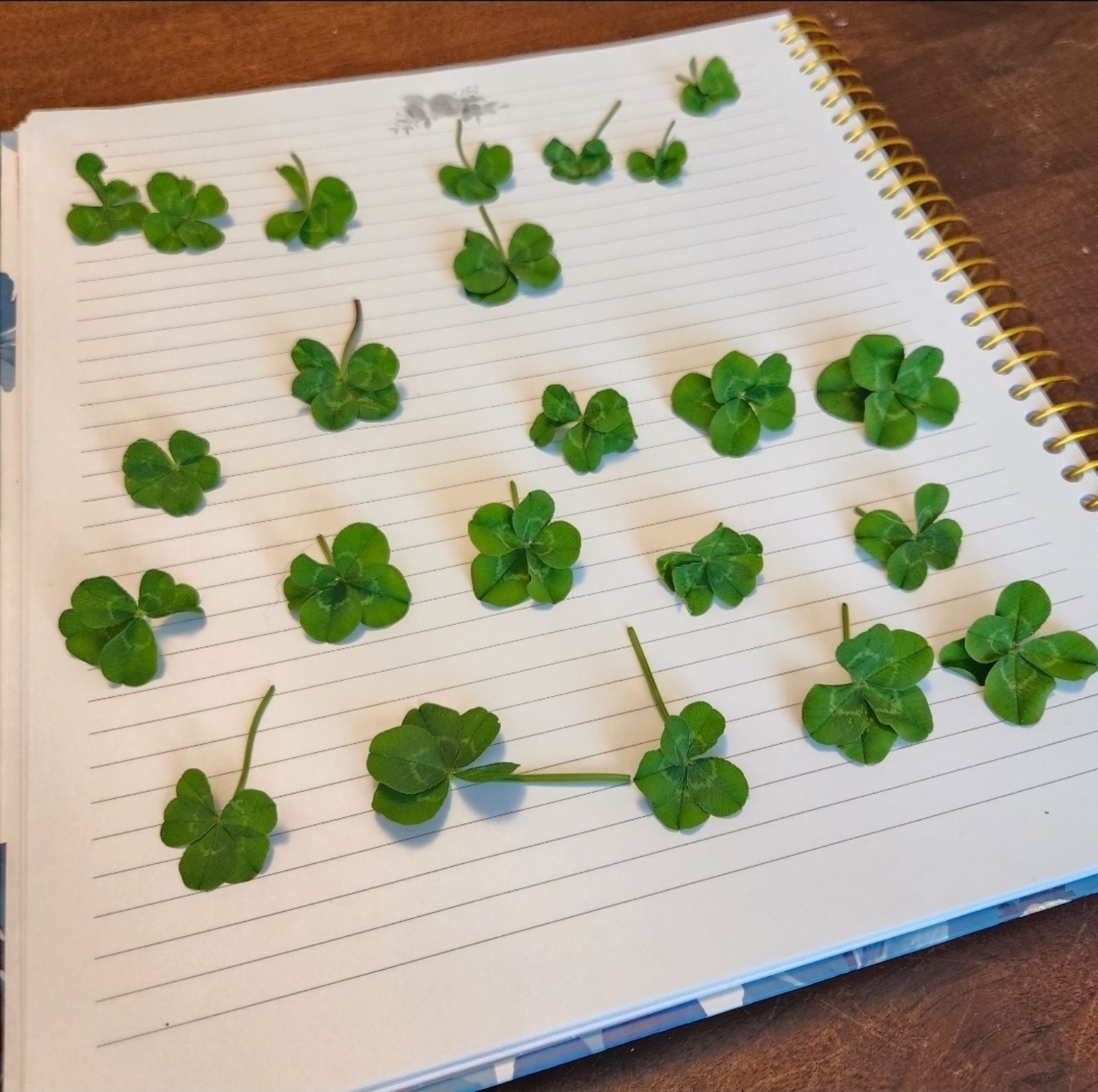
A few from a single pass.
I didn’t learn to analyze in a vacuum. I learned it in the grass, a long time ago, staring into a sea of green, teaching myself how to notice what others overlook.
In both the grass and the code, there’s a real joy in the hunt for anomalies. That’s where the bugs are.